
 Available in US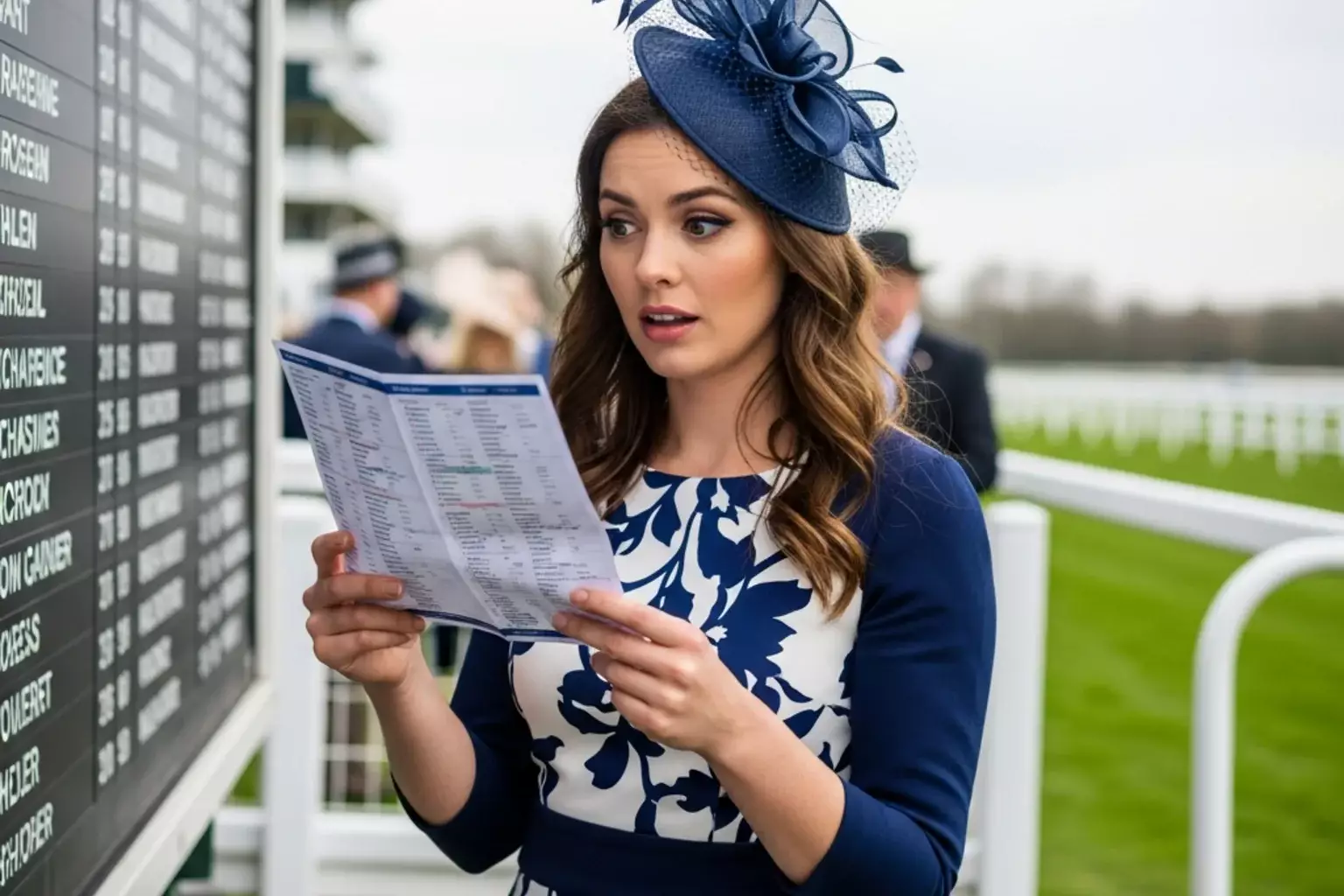
- Cheltenham Betting for Beginners: Your First Bet Without the Guesswork
- Understanding Odds: Fractional, Decimal and What They Mean for Your Return
- Bet Types Explained: Win, Each Way, Accumulator, Ante-Post
- How to Read a Cheltenham Race Card
- Choosing Your First Bookmaker: What Matters Beyond the Welcome Offer
- Placing Your First Cheltenham Bet: A Walkthrough
- Five Beginner Mistakes and How to Avoid Them
- Responsible Gambling for New Bettors
Cheltenham Betting for Beginners: Your First Bet Without the Guesswork
Cheltenham betting for beginners starts with an admission: the whole thing looks intimidating from the outside. Fractional odds, each-way terms, ante-post markets, non-runners, going descriptions — the language of horse racing has accumulated layers of jargon over centuries, and no one expects you to absorb it all before Tuesday’s first race. The good news is that you do not need to. You need to understand enough to place a bet that makes sense, on a horse you have a reason to back, at odds that mean something to you. Your first Cheltenham bet, explained without the jargon.
The Cheltenham Festival is not a niche interest. A University of Gloucestershire study for the Jockey Club found that 67% of Festival visitors consider Cheltenham a bucket-list experience. The sport itself generates over £4.1 billion in combined direct and indirect economic contribution to the UK, according to the House of Commons Library. This is not a quaint pastime surviving on nostalgia. It is a major industry, and betting is its commercial engine.
James Knight, a trading representative at Entain, summed it up well: punters are drawn to two things when it comes to horse racing — quality and competitiveness — and Cheltenham delivers both consistently. That combination is what makes the Festival the ideal place to start betting on racing, because the fields are strong, the form is well documented, and the sheer volume of media coverage means information is more accessible than at any other meeting in the calendar.
This guide will walk you through everything you need to know to place your first Cheltenham bet with confidence. We are covering odds, bet types, race cards, bookmaker selection, and the step-by-step process of getting money on a horse. Nothing is assumed. Everything is explained.
Understanding Odds: Fractional, Decimal and What They Mean for Your Return
Odds tell you two things: how much you stand to win if your bet is successful, and — implicitly — how likely the bookmaker thinks that outcome is. The higher the odds, the bigger the potential payout and the lower the perceived probability. The lower the odds, the smaller the payout and the higher the chance of winning. That is the entire concept. Everything else is notation.
In the UK, odds are traditionally displayed as fractions. A horse priced at 5/1 (said as “five to one”) will pay you £5 profit for every £1 you stake, plus your original stake back. So a £10 bet at 5/1 returns £60 — that is £50 profit plus your £10 stake. A horse at 2/1 returns £30 on a £10 stake. A horse at 1/2 (an “odds-on” favourite) returns £15 on a £10 stake — five pounds of profit plus the ten you put down. The shorter the price, the less profit relative to your stake.
Decimal odds do the same job with simpler arithmetic. A horse at 6.00 in decimal is the same as 5/1 in fractional. To calculate your return, multiply your stake by the decimal odds: £10 × 6.00 = £60. That figure includes your stake. A horse at 3.00 decimal equals 2/1 fractional. A horse at 1.50 decimal equals 1/2 fractional. Most UK bookmaker apps let you toggle between fractional and decimal display in the settings — pick whichever format you find easier to process quickly, because during a live race meeting you will be scanning prices rapidly and the last thing you need is mental arithmetic slowing you down.
Implied probability is the hidden dimension. Odds of 4/1 imply a 20% chance of winning (calculated as 1 divided by 5, the total of both sides of the fraction). Odds of evens (1/1) imply 50%. Odds of 1/4 imply 80%. Bookmakers build a margin — called the overround — into their odds, which means the implied probabilities of all runners in a race add up to more than 100%. A typical Cheltenham race might have an overround of 115–125%, meaning the bookmaker’s edge is built into the prices. You do not need to calculate overrounds to place your first bet, but being aware that the odds are not a perfect reflection of true probability is useful context. The price you take is the bookmaker’s opinion, not a mathematical certainty.
One term you will encounter constantly: “starting price” or SP. This is the official odds of a horse at the moment the race begins, as determined by the on-course betting market. If you bet at SP, you accept whatever price the horse is when the stalls open. If you take a fixed price earlier in the day — say, 8/1 at 10am — you lock in that price regardless of what happens to the market before the off. Most bookmakers offer “Best Odds Guaranteed” on UK racing, which means you get the better of your fixed price or the SP. For beginners, taking a price early and relying on BOG is a simple, effective approach.
Bet Types Explained: Win, Each Way, Accumulator, Ante-Post
The simplest bet is a win bet. You pick a horse, you stake your money, and if it finishes first, you get paid at the odds. If it finishes anywhere else, you lose your stake. That is it. Clean, binary, no complications. For your first Cheltenham bet, a win single on a horse you have a reason to back is a perfectly good starting point.
An each-way bet is two bets in one, and it is where things get slightly more involved. When you place £10 each way, you are actually placing two separate £5 bets: £5 on the horse to win and £5 on the horse to place (meaning it finishes in the top two, three, four or five depending on the number of runners and the race conditions). Your total outlay is £10 — not £5. This catches beginners out every time.
Imagine you place £10 each way on a horse at 10/1 in a Cheltenham race with 16 or more runners, where the each-way terms are 1/4 odds for four places. If the horse wins, you collect on both parts: £50 profit from the win bet (£5 at 10/1) plus £12.50 from the place bet (£5 at 10/4, which is 2.5/1), plus your two £5 stakes returned. Total: £77.50 from a £10 outlay. If the horse finishes second, third or fourth but does not win, you lose the £5 win bet but collect on the place bet: £12.50 profit plus your £5 place stake back, giving you £17.50 from a £10 outlay — a profit of £7.50. If the horse finishes fifth or worse, both bets lose and you are down £10.
Each-way betting is popular at Cheltenham because the Festival’s big-field handicap races — the Ultima, the County Hurdle, the Coral Cup — regularly have 20-plus runners, which means four or even five places are paid. The more places available, the more forgiving each-way betting becomes, and the larger the field, the more likely a well-handicapped horse outside the top three in the market can sneak into the places at a price that provides a return.
An accumulator (or “acca”) combines multiple selections into a single bet. The odds multiply together, creating the potential for large returns from small stakes. A four-horse accumulator at 3/1, 4/1, 5/1 and 6/1 has combined odds of 839/1 — a £1 bet returns £840 if all four win. The catch, of course, is that all four must win. If one loses, the entire bet is void. Accumulators are exciting but statistically brutal: the probability of landing a four-fold is the product of four individual probabilities, and even backing four well-fancied horses, that product is usually well under 5%.
Ante-post bets are wagers placed days, weeks or months before a race. The advantage of betting ante-post is price: you can often get significantly better odds on a horse weeks before the Festival than on the day, because the market sharpens as the race approaches and information becomes more complete. The risk is that if your horse does not run — due to injury, change of plans, or unsuitable ground — you lose your stake. There is no refund on ante-post bets. This “non-runner, no bet” protection is sometimes offered as a promotion by bookmakers, and it is worth seeking out if you want to back a horse early without the risk of losing your money to a withdrawal.
For a first-time Cheltenham bettor, the recommendation is straightforward: start with win singles and each-way bets. Learn how the returns work, get comfortable with the process of placing a bet and watching a race, and leave accumulators and ante-post markets for when you have a season’s experience under your belt.
How to Read a Cheltenham Race Card
A race card is the programme for a day’s racing, listing every race, every runner and the key information about each horse. It looks dense at first glance, but the layout follows a consistent structure that becomes readable with a few minutes of practice.
Each horse entry on the race card includes a number (its cloth number, worn on the saddlecloth so you can identify it during the race), the horse’s name, the trainer, the jockey, the weight it carries, the age, and its recent form figures. The form figures are the most useful shorthand on the entire card. They are a sequence of numbers representing the horse’s finishing positions in recent races, read from left to right with the most recent result on the right. A form line of “2131” means the horse finished second, then first, then third, then first in its last four starts. A “0” means it finished outside the first nine. A “P” means it pulled up (stopped during the race). An “F” means it fell. A “U” means the jockey was unseated.
The weight a horse carries is expressed in stones and pounds. In a handicap race, the official handicapper assigns a weight based on the horse’s rating — better horses carry more weight to level the playing field. In championship races like the Champion Hurdle or the Gold Cup, the weight is determined by age and sex rather than ability, so the best horse in the field carries the same weight as the worst. Understanding whether a race is a handicap or a conditions race tells you whether the weights are designed to compress the field (handicap) or let the best horse win without penalty (conditions/championship).
The going — the description of ground conditions — appears at the top of the race card and is updated throughout the day. Cheltenham uses standard National Hunt going descriptions: heavy, soft, good to soft, good, good to firm. The going matters because some horses perform dramatically better on specific ground. A horse with form figures of “111” on soft ground and “PPP” on good to firm is not inconsistent — it is a specialist, and your bet should reflect whether the going suits it. On race day, check the going report before the first race and be prepared to adjust your plans if the ground has changed overnight.
Headgear codes are a detail that beginners often overlook but experienced punters watch closely. “t” means the horse wears a tongue-tie (to help breathing). “v” means a visor (blinkers with a slit, to aid concentration). “b” means full blinkers. “h” means a hood (to calm a nervous horse). First-time headgear — indicated by a “1” after the code — is particularly significant because it suggests the trainer is trying something new to improve the horse’s performance. In a competitive Cheltenham field, a horse appearing in first-time headgear from a shrewd trainer is worth a closer look.
Choosing Your First Bookmaker: What Matters Beyond the Welcome Offer
The welcome offer is what gets you in the door, but it is not what keeps you there. Choosing your first bookmaker for Cheltenham should be based on factors that matter beyond the sign-up bonus — because once the free bet is used, you are left with the platform, the prices, and the features for the rest of the Festival and beyond.
Odds competitiveness is the single most important factor. A bookmaker that consistently offers odds a tick longer than its rivals saves you money on every bet over time. The difference between 5/1 and 11/2 on a £10 bet is only £5 of extra profit, but across thirty or forty bets during Cheltenham week, those marginal differences compound. Use an odds comparison site or simply open two or three apps side by side before each race to check where the best price sits. Best Odds Guaranteed — where the bookmaker pays out at the higher of your price or the starting price — is offered by almost all major UK bookmakers on horse racing, so make sure your chosen operator includes it.
The app experience matters more than people admit. You will be placing bets on your phone, probably while standing in a crowd, watching a screen, or checking results between races. An app that loads slowly, hides the bet slip behind three menu taps, or crashes when the server is under Festival-week load is not just annoying — it costs you money if it prevents you from getting a bet on before the price moves. The major operators — bet365, Paddy Power, Sky Bet, Betfair, William Hill, Ladbrokes, Betfred — all have mature apps that handle high traffic, but the user experience varies. Download two or three before the Festival, navigate them, place a small test bet, and decide which one you find most intuitive.
Consider the broader economics of attending or following the Festival. The average visitor to the 2022 Cheltenham Festival spent £697, up from £584 in 2016, according to the Jockey Club. That figure includes tickets, transport, food, accommodation and betting. Your betting budget should be one component of your overall Festival spend, not the whole of it. Choose a bookmaker that helps you manage that budget with clear deposit limits, transparent bet history, and easy access to responsible gambling tools.
British horse racing is served by an industry that employs over 20,000 people across 59 licensed racecourses, as documented by the House of Lords Library. When you place a bet with a UKGC-licensed bookmaker, a portion of the revenue feeds back into the sport through the Horserace Betting Levy. Choosing a licensed operator is not just a regulatory requirement — it is a contribution to the ecosystem that makes Cheltenham possible.
Placing Your First Cheltenham Bet: A Walkthrough
You have chosen your bookmaker, you understand odds, and you know the difference between a win bet and an each-way. Now it is time to place your first Cheltenham bet. Here is the process, from opening the app to watching the race.
Open the app and navigate to the horse racing section. During Festival week, Cheltenham will be prominently featured — usually a dedicated tab or banner at the top of the racing page. Select the day and the race you want to bet on. The race card will load, showing you all the runners, their odds, and the key form information.
Browse the runners and identify your selection. For your first bet, keep it simple. Pick a horse based on something tangible — recent form, a jockey you recognise, a trainer with a strong Cheltenham record, or a recommendation from a source you trust. Do not agonise over it. The point of your first bet is to experience the process, not to find a guaranteed winner. There are no guaranteed winners at Cheltenham, and anyone who tells you otherwise is selling something.
Tap on the odds next to your selection. This adds the horse to your bet slip, which will appear at the bottom of the screen. The bet slip will show the horse’s name, the current odds, and a field where you enter your stake. Type in the amount you want to bet. If you are placing a win bet, you will see the potential return calculated automatically. If you want to bet each way, toggle the “each way” option on the bet slip — this will double your stake and show separate potential returns for a win and a place.
Before you confirm, check three things. First, the odds — are they still what you expected, or have they moved since you added the selection? If the price has shortened significantly, you can remove the selection and wait, or accept the new price. Second, the stake — is the amount correct, and is it within the budget you set for yourself? Third, the bet type — is this a win bet or an each way, and is that what you intended? Once you are satisfied, hit the “Place Bet” button. Your bet is now live.
When the race begins, the bet slip updates in real time on most apps, showing your horse’s position during the race. If it wins, the return is credited to your account balance within minutes. If it loses, the stake is deducted. Either way, you have just placed your first Cheltenham bet. The next one will feel easier, and by Gold Cup Day you will be navigating the app without thinking about it.
Five Beginner Mistakes and How to Avoid Them
Every experienced punter started as a beginner, and every experienced punter made at least one of these mistakes during their first Festival. Knowing them in advance will not make you immune, but it will reduce the cost of the learning curve.
Betting on every race. Seven races per day, four days, twenty-eight opportunities to have an opinion. The temptation to bet on all of them is powerful — you are at Cheltenham, the atmosphere is electric, and sitting out a race feels like a waste. But not every race offers value, and not every race falls within your competence. If you have studied the Champion Hurdle but know nothing about the Ultima Handicap Chase, bet on the Champion Hurdle and watch the Ultima for enjoyment. Selectivity is the foundation of profitable betting, and it starts on day one.
Chasing losses after an early loser. Your first bet of the Festival loses. You feel behind already, even though “behind” is an arbitrary concept when you are four minutes into a four-day event. The instinct is to increase the stake on the next race to recover the loss. This is the single most destructive pattern in gambling, and it is not a strategy — it is an emotional response. Stick to your pre-set stakes regardless of results. The Festival is a marathon, not a sprint, and individual race outcomes are irrelevant to your overall approach.
Ignoring the going. The ground conditions at Cheltenham can change within hours. Rain overnight can shift the going from good to soft, turning the formbook upside down. A horse that looked a certainty on Monday might struggle on Tuesday if the ground has turned against it. Check the going before the first race, listen for updates between races, and be prepared to scratch a bet if the conditions no longer suit your selection. This is not indecision — it is discipline.
Following the crowd into favourites. Short-priced favourites win at Cheltenham, but not nearly as often as their price suggests they should. The Festival atmosphere amplifies herd behaviour — everyone backs the same horse because everyone else is backing it, and the price contracts to a point where the value has evaporated. A horse at 4/6 needs to win roughly 60% of the time to be a profitable bet at that price. Ask yourself honestly whether you believe the horse will win six out of ten identical races. If the answer is not a confident yes, the price is too short.
Not setting a budget. This is the most basic mistake and the most consequential. If you arrive at the Festival — physically or digitally — without a clear, fixed budget for the week, you are operating without a safety net. Decide before Tuesday how much you are prepared to lose across all four days. Divide it into daily allocations. When a day’s allocation is spent, stop. No exceptions, no borrowing from tomorrow’s budget, no emergency deposits. The Festival will be enjoyable whether you bet £20 or £200 across the week. It will not be enjoyable if you spend money you cannot afford to lose.
Responsible Gambling for New Bettors
If you are placing your first ever bet during Cheltenham, this section is more important than anything that came before it. Betting should be entertainment — an enhancement to the experience of watching world-class horse racing, not a source of stress or financial pressure.
Before you deposit a single pound, set a deposit limit with your bookmaker. Every UKGC-licensed operator is required to offer this. Set it at an amount you can genuinely afford to lose without any impact on your bills, savings or daily life. If that amount is £20 for the week, that is a perfectly reasonable Festival betting budget. There is no minimum threshold for having a good time.
Be honest with yourself about how the betting makes you feel. If a losing bet triggers frustration, anxiety, or an urgent desire to bet again immediately, those are signals worth paying attention to. If you find yourself thinking about betting more than you are thinking about the racing, the balance has shifted in the wrong direction.
GambleAware offers free and confidential support for anyone affected by gambling. GamStop provides a single self-exclusion mechanism that covers all UKGC-licensed online operators. These services exist for a reason, and using them is a sign of good judgement, not weakness. Enjoy the Festival. Bet within your limits. And if the limits stop working, ask for help.
The full picture is in our Cheltenham free bets comparison.
The first bet type to learn is each-way betting.
The full picture is in our Cheltenham free bets comparison.
